A golf goal setting worksheet works best when it focuses you on one main goal rather than a scattered list of outcomes. Choose a specific target you can measure, assess your current game, then break the goal into milestones and repeatable practice actions. Set long-term goals at least a year ahead and short-term goals within six months, so you can see both the direction and your next step.
It’s natural to focus on the score you want to shoot, but a result alone doesn’t tell you what to work on today. A clear plan links that outcome to skills, routines, and decisions you can influence. Learn how to choose a meaningful goal, identify the parts of your game with the greatest impact, plan practice around them, and track progress through regular reviews. The aim isn’t to force improvement on a schedule. It’s to make each practice session purposeful and give yourself a steady way to adjust as your game develops.
Key Takeaways
- Choose one main golf goal, then make it specific enough to guide your next decision.
- Separate the result you want from the process habits and mental skills that can move you toward it.
- Use your recent rounds to find the scoring weaknesses with the greatest effect on your goal.
- Build a practice routine around those priorities, with actions that fit your real schedule.
- Review your progress regularly and adjust the plan when your performance or priorities change.
Distinguishing long-term, short-term, and process goals
The reflection and goal-setting worksheet is available to read on this page and download as a PDF. Use it to record your target, milestones, and practice actions.
A golf goal-setting worksheet can also be adapted for junior and youth players. Include age-appropriate golf, academic, fitness, and personal goals, then agree on manageable actions with the young golfer.
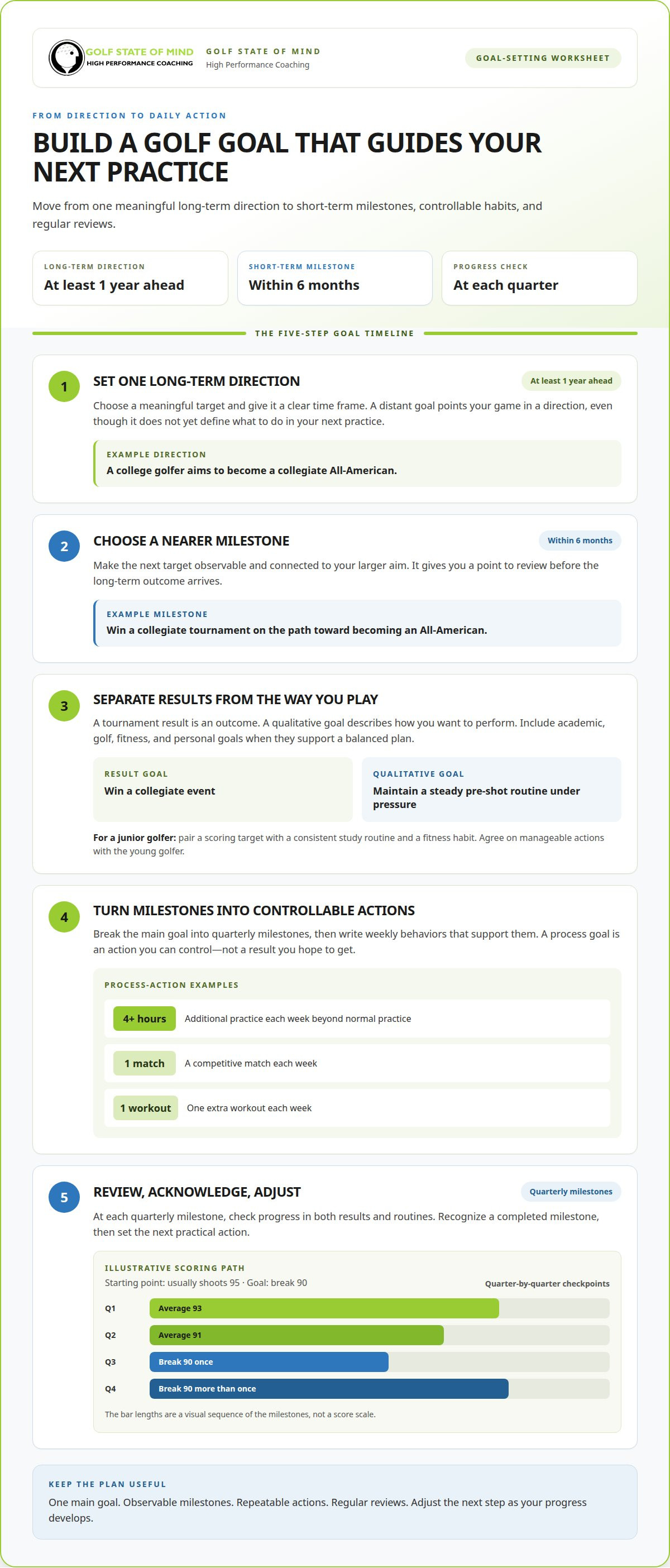
- Set one long-term direction and give it a clear time frame. Long-term goals should look at least a year ahead. A college golfer might aim to become a collegiate All-American, while another player may choose a personal milestone suited to their competitive path. A distant goal provides direction, but it doesn’t tell you what to do in your next practice.
- Choose a short-term milestone that moves you toward the larger aim. Set short-term goals within six months and make them observable. For example, a college golfer aiming to become an All-American could set a nearer goal of winning a collegiate tournament. A short-term target gives you a point to review before the long-term outcome arrives.
- Separate tournament results from qualitative goals. A tournament goal might be to win a collegiate event; a qualitative goal could be to maintain a steady pre-shot routine under pressure. Add academic, golf, fitness, and personal goals when they support a balanced plan. For instance, a junior golfer might pair a scoring target with a consistent study routine and a fitness habit.
- Turn each milestone into process actions you can control now. Break the main goal into quarterly milestones, then write down the weekly behaviors that support them. Examples include at least four additional practice hours each week beyond normal practice, a competitive match each week, or one extra workout each week. A process goal describes an action, not a result.
- Review the plan at each quarterly milestone and adjust the next actions to match your progress. A golfer who usually shoots 95 and wants to break 90 might target an average of 93 in Q1 and 91 in Q2, break 90 once in Q3, then break 90 more than once in Q4. Record improvements in both results and routine. Acknowledge a completed milestone, then set the next practical step.
Before choosing a practice priority, use recent rounds as evidence. A score shows the outcome, but your scorecard and memory can reveal where shots were lost. Review your decisions as well as your execution. A missed green may follow a poor approach, a difficult lie, or a rushed choice. Separating the causes helps you target a skill instead of reacting to one frustrating number.
- Collect scorecards and note details while each round is still fresh. Record the hole, score, penalty strokes, missed greens, difficult chips, and putts that affected your result. Add a brief comment about your decision or emotional state when it mattered. For example, note whether a poor approach followed a committed target or indecision. These details turn a broad impression, such as “my short game was bad,” into a specific issue to examine.
- Compare the score you want with the scoring pattern you currently produce. A golfer trying to break 90 needs to average about 17 strokes over par. Treat that as a reference point, then inspect which holes create the largest gap. A double bogey can come from different causes, so record the sequence rather than labeling the whole hole a failure. The aim is to find repeatable opportunities, not to judge a round by its worst moment.
- Trace costly holes shot by shot and identify the first controllable error. One round included a double bogey on hole 16 after two poor chip shots. Review whether the approach left a difficult recovery, whether the chip choice matched the lie, and whether the routine stayed steady. Write down the earliest point where a different decision could have reduced risk. This prevents you from treating the final putt as the only cause of a high score.
- Separate execution problems from decision-making and mental patterns. Mark whether a missed fairway, approach, chip, or putt involved contact, club selection, target choice, or lost focus. Look for repeated situations in your notes rather than reacting to one unusual bounce. If pressure changes your tempo or commitment, include that pattern in your assessment. A scoring weakness may involve your response after a mistake, not just the shot that started the trouble.
- Choose two or three skills with the clearest potential to influence your goal. Rank them by how often they appear in your records and how directly you can practice them. If poor chips repeatedly leave long putts, short-game control may deserve attention before a less frequent issue. Write one observable sign of progress beside each priority, such as selecting a clear target and completing your routine. For mental performance, structured mental-game training can help you examine focus, decisions, and responses under pressure.
Planning realistic weekly practice
- Start with your calendar, not an idealized training week. Mark work, school, family commitments, tee times, and existing workouts first. Then fit practice into the time that remains. For example, a golfer with a crowded weekday schedule might protect a weekend session and use a free evening for putting. A plan built around your actual routine is easier to repeat than one that depends on time you don’t have.
- Give every practice session a purpose linked to your priority skills. If approach shots are costing you, choose a target and note whether each shot finishes on the intended side. If putting needs attention, work on pace control and record whether the ball finishes near the target. Avoid hitting balls without a clear task. Before you begin, write down what success looks like for that session, then review the result afterward.
- Balance focused practice with on-course experience. A range session can isolate contact or direction, while playing reveals how choices and pressure affect execution. Use the course to test one intention, such as committing to a conservative target after a poor shot. Schedule at least one playing lesson or video analysis session per quarter. That review can help you examine a recurring pattern and choose a useful adjustment for your next practice block.
- Build a weekly sequence that connects practice to competition. For example, use one session to rehearse a skill, another to test it with changing targets, then use a round to see whether it transfers. If weather or commitments interrupt the plan, move the priority session rather than cramming every task into one day. Keep a simple record of completed sessions, the skill addressed, and one observation to guide your next practice.
- Review the week before adding more work. Compare the sessions you planned with those you completed, then identify what helped and what repeatedly disrupted the schedule. If a practice task felt too broad, make it more specific next week; if it was unrealistic, revise your calendar. Keep the main goal steady while changing the method when the evidence supports it. A practical plan should guide your attention, not make you feel guilty about a missed session.
Break a main golf goal into quarterly milestones, with 4+ additional practice hours each week beyond normal practice time. The author had not practiced or played golf for nearly five months.
Tracking statistics and reviewing progress
Measure progress through rounds and practice already in your routine, rather than adding volume just to collect more data. Record discomfort or fatigue alongside performance, and adjust practice instead of pushing through symptoms.
- Track your last 10 rounds to calculate your true average score. Enter each score in order, then compare the average with your target rather than judging progress from one strong or difficult day. Add brief context when conditions or decisions shaped the result. For example, note whether a high score followed penalty strokes or trouble around the green. The context helps explain a change without letting one unusual round define your game.
- Select statistics that connect directly to your goal. If your focus is putting, record putts per round and consider a target such as averaging 32 putts or fewer per round. If you’re tracking approach play, note greens reached and what happened after a miss. Choose measures you can record consistently. A long list of unrelated numbers can distract from the specific performance change you’re trying to understand.
- Review your golf statistics monthly and compare them with your targets. Look for patterns, then ask what changed in your decisions, routines, or practice. If your putting average remains above your target, check whether missed putts cluster at a particular distance or follow rushed routines. Record one practical adjustment for the next month. Keep your measure consistent so comparisons remain useful.
- Set aside time for a deeper review of your notes and goals. A six-week reflection period can help you look beyond the latest scorecard and notice recurring themes. Compare your target with the actions you completed and the outcomes you recorded. If your practice was consistent but the statistic stayed flat, reconsider the practice task or how you measure it. Change the method thoughtfully, not just because of one poor round.
- Use each review to choose a clear next action and keep the context around it. For example, if your notes show missed short putts after hurried routines, track whether you complete your routine during the next practice block. Keep your workload steady while observing the result; don’t add extra sessions just to improve the numbers. At the next monthly review, compare the same statistic and routine notes, then decide whether to continue or revise the plan.
Choosing one specific, measurable golf goal
- Choose one main golf goal before adding supporting targets. A single priority makes it easier to decide what deserves attention when practice time is limited. Start by writing down the change that would matter most to your game. For example, you might want to make more committed decisions under pressure. Keep other ambitions in a notes column, but don’t let them compete with the goal guiding your current plan.
- Replace broad intentions with an observable measure. “Improve my course management” is difficult to assess because it doesn’t describe what you’ll do. A clearer target could be, “Before each tee shot, choose a target and commit to it.” You can record whether you completed that action during a round. The measure should show what happened, not depend only on whether the final score felt satisfying.
- Write the goal so another golfer could understand when you’ve met it. Name the situation, the action, and the evidence you’ll record. For instance, “After a missed green, pause, assess the lie, and select a recovery shot before setting up.” This links a specific moment to a repeatable response. It also gives you a practical review point, rather than leaving success open to interpretation after the round.
- Check whether your goal focuses on something within your influence. You can’t control every bounce, an opponent’s score, or the final tournament result. You can control your preparation, target selection, and response to setbacks. If your ambition is to win an event, keep that outcome as your direction, then choose a measurable behavior that supports your performance. This keeps your daily standard steady when results vary.
- Test the wording against your schedule and tracking method before committing. Ask whether you know when to perform the action and how you’ll record it. If “stay focused” is the draft, define the observable behavior, such as returning attention to the next shot after a mistake. Keep the final statement brief enough to remember on the course. For help building a more deliberate mental approach, explore structured mental-game training.
The plan recommends choosing one main golf goal to focus on: One. Keep that priority at the center of your attention, and let other ambitions remain secondary for now. Ask whether the goal still feels like the clearest expression of what you want to work toward. If several aims seem equally important, return to choosing one main goal rather than combining them into a crowded statement. This gives your plan a clear focus and helps you stay oriented toward the priority you selected.
Golf State of Mind: The Ultimate Mental Game Training System
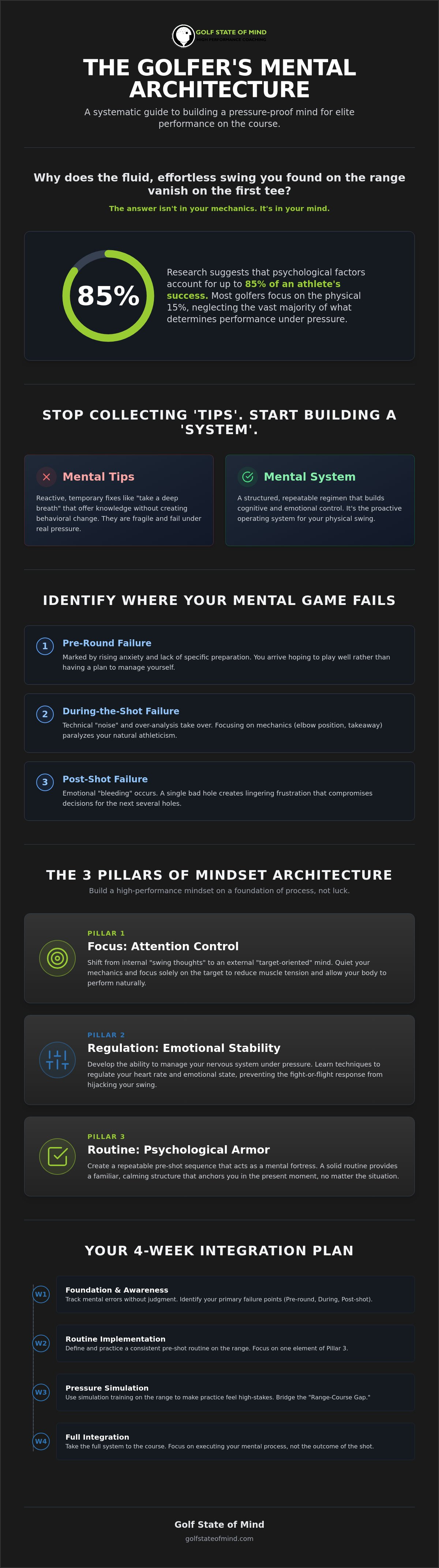
Golf State of Mind’s The Ultimate Mental Game Training System For Golf offers structured training focused on the psychological side of golf. Use it when your goal involves steadier focus, stronger routines, or a more deliberate response under pressure. It can complement your measurable practice plan by helping you work on the mental skills behind your actions.
If you want individual support applying mental game principles to your own goals, 1:1 Mental Coaching is another option. Mental Game Audios can also support focused preparation. Choose the format that fits the kind of guidance you’re seeking, then keep measuring the actions and outcomes that matter to your game.
Visit Golf State of Mind to explore the training options and decide on a next step.
Carry Your Goal Into the Next Round
A written goal becomes useful when it shapes your next decision on the course. Keep your golf goal setting worksheet accessible and use it to reconnect with your intention when pressure or frustration shifts your attention. Progress isn’t only a lower score. It can also mean a more deliberate routine, a calmer response after a mistake, or greater commitment to your chosen shot.
If a specific mental pattern keeps interrupting your plan, choose support that addresses it. Golf State of Mind offers How to Cure the Yips for golfers working through that challenge, alongside broader mental game training. The aim is to strengthen the process you can control, one decision at a time.
Explore The Ultimate Mental Game Training System and continue building a more focused approach to your game. Let your next step be clear, deliberate, and yours to take.
Frequently Asked Questions
What should a golf goal-setting worksheet include?
A useful golf goal-setting worksheet should capture your current baseline, your target, and how you’ll recognize progress. Include space for controllable actions, review dates, and brief notes about course conditions or pressure. Those notes help explain why a result changed. Keep the layout simple enough to complete after a round, and make the goal statement clear enough to guide your next practice choice.
How do you set SMART golf goals for beginners and experienced players?
Make each goal specific, measurable, achievable, relevant, and time-bound. A beginner might focus on following a consistent pre-shot routine during practice, while an experienced player could measure commitment to a chosen target under competitive pressure. Define the action and the evidence you’ll record. Then set a review point that fits your playing schedule, so you can assess the goal without judging it by one memorable shot.
What golf statistics should you track on a goal worksheet?
Track statistics that directly reflect your chosen priority. Scoring goals may call for total score and penalty strokes; a tee-shot goal might include fairways hit and the direction of misses. For a mental-performance goal, record whether you completed your routine or committed to your intended target. Avoid collecting numbers simply because they’re available. A short, relevant record is easier to interpret and more useful when choosing practice tasks.
How do you set goals for golf handicap and score improvement?
Use representative recent rounds to choose a score target that challenges you without ignoring your current performance. Treat handicap and score as outcome measures, then identify the decisions or skills that may influence them. For example, a golfer working toward a lower handicap could also track penalty strokes and recovery choices. Compare like with like where possible, and avoid changing the goal after one unusually strong or difficult round.
How often should golfers review and update their goals?
Review statistics monthly, then decide whether the goal, practice method, or tracking measure needs adjustment. Keep the target steady if the plan remains workable, but revise your actions when your schedule changes or the evidence points to a different priority. After a tournament, note what held up under pressure and what did not. Use that reflection in your next review rather than deciding immediately based on emotion.
What are examples of short-term and long-term golf goals?
A short-term goal could be to complete your pre-shot routine consistently during upcoming rounds or improve your decisions around the green. A long-term goal might be to earn a place on a college team or perform more steadily through a competitive season. Pair each outcome with a behavior you can practice and observe. That connection keeps a distant ambition relevant to the choices you make on the course today.