What Does a Golf Mental Coach Do? Peak Performance Guide
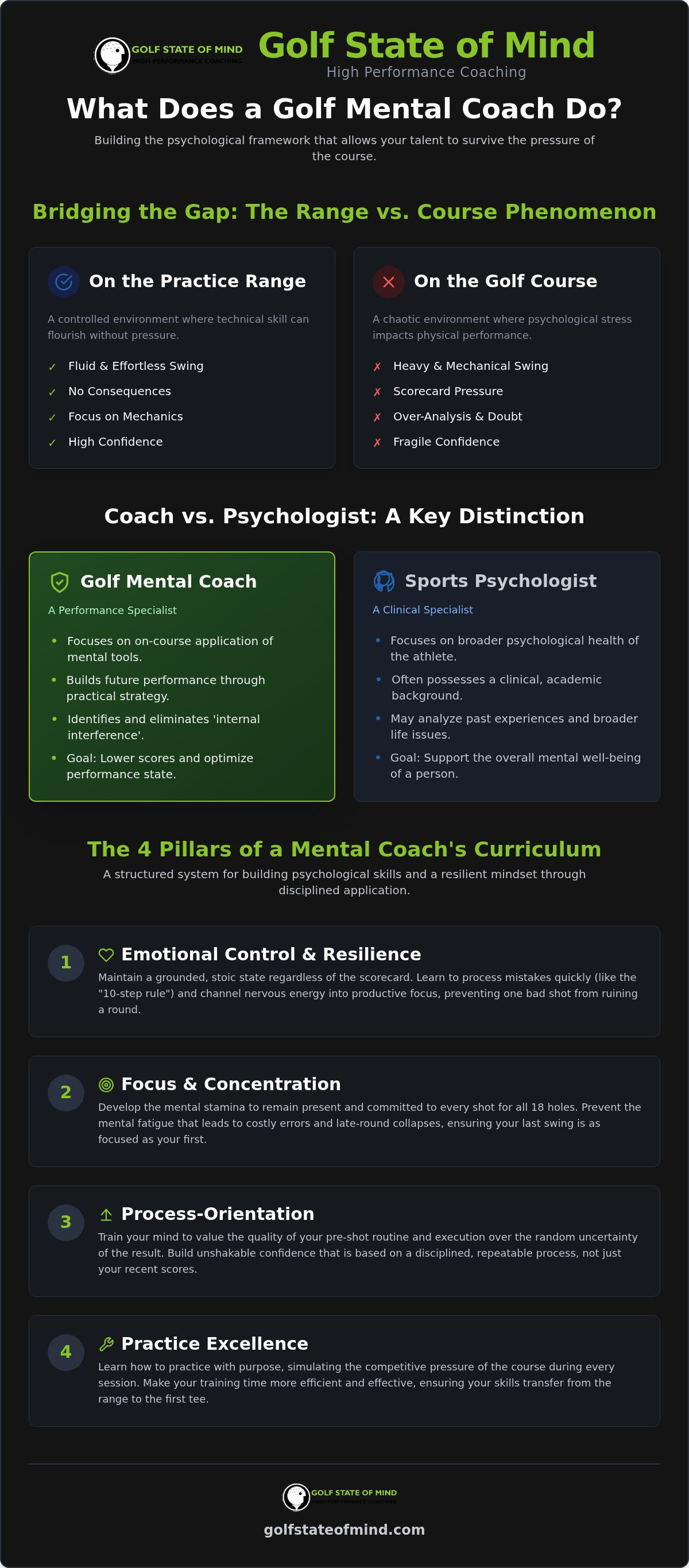
Why does the fluid, effortless swing you found on the practice range suddenly feel heavy and mechanical the moment you step onto the first tee? It’s…
Get your FREE Mental Game Scorecard



Fear of failure in golf can show up before the scorecard tells the story. It may tighten your grip, quicken your swing, or make you hesitate over a shot you’d normally play freely. Pressure isn’t only in your thoughts; it can change how you approach the ball and commit to the swing.
It’s understandable to feel tense when a score, a missed opportunity, or other people’s expectations seem to matter. But noticing tension is different from letting it dictate your next shot. Start by recognizing how fear shows up in your own game.
This article explains the signs of fear of failure in golf, including the physical and mental patterns that can disrupt your routine. You’ll learn how expectations and pressure can trigger those patterns, and how to acknowledge the fear and question the belief behind it. The goal isn’t to force confidence. It’s to respond with greater awareness and return your attention to the shot in front of you.
Golf anxiety can affect your body, attention, and decisions before it changes your score. Notice the signals around a specific shot, such as a short putt or a demanding tee shot.
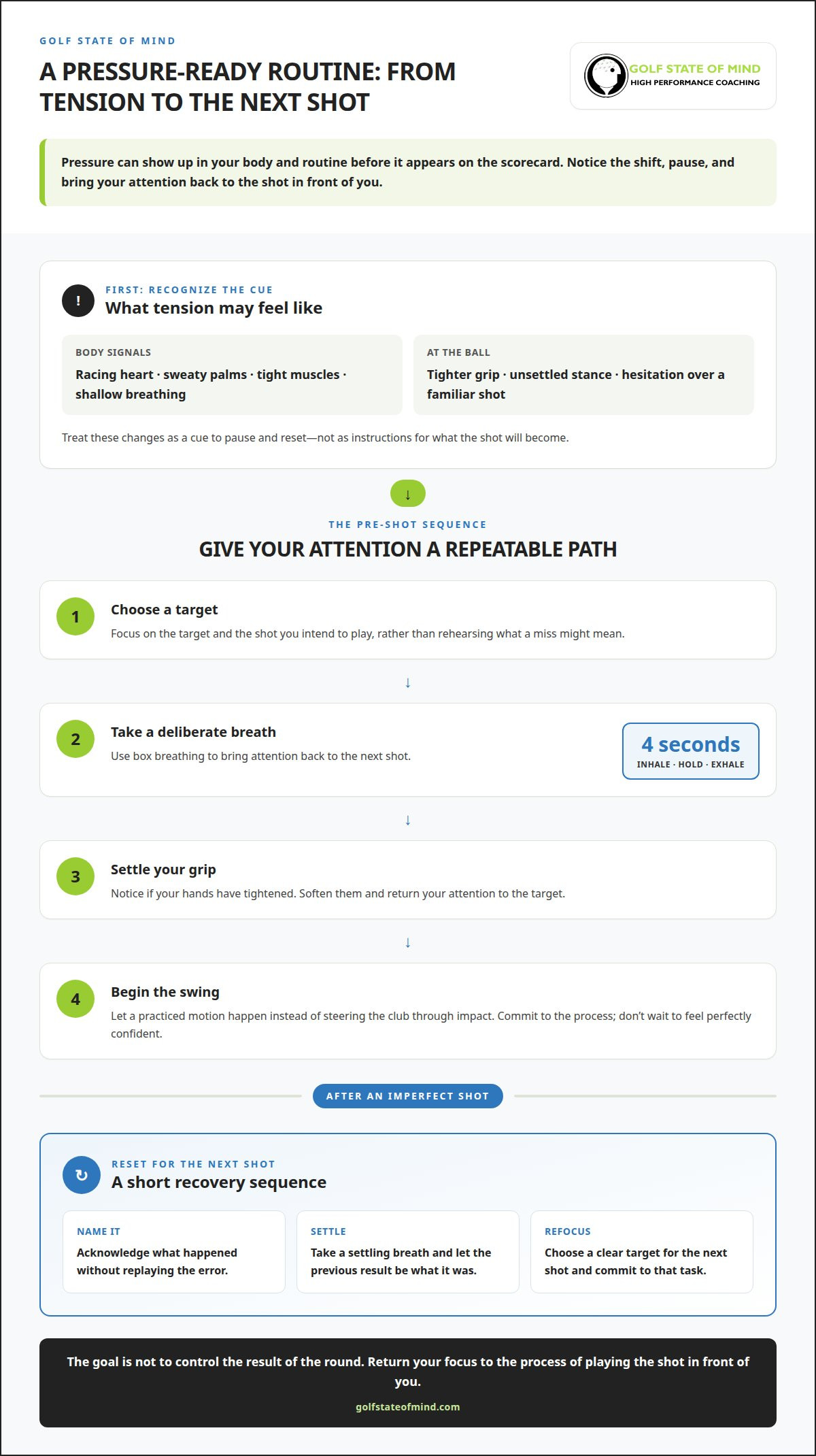
Anxiety is the body’s response to perceived pressure, and on the course it can change how you feel physically. A racing heart, sweaty palms, tight muscles, and shallow breathing may come with a tighter grip or an unsettled stance. These changes matter because tension and hesitation can disrupt a familiar swing. Notice them as a cue to pause and reset.
A simple pre-shot routine gives your attention a repeatable path: choose a target, take a deliberate breath, settle your grip, and begin the swing. Kevin Sprecher describes box breathing as inhaling, holding, and exhaling for four seconds at a time. Practicing steady breathing in difficult moments can help bring your attention back to the next shot instead of the result you fear.
Sports psychologists recommend using breathing, a consistent routine, and a process cue to direct your attention. For example, focus on the target and the shot you intend to play, rather than rehearsing what a miss might mean.
Choking describes a disruption in performance under pressure, while the yips involve involuntary movements that can interfere with a putting or short-game stroke. Pre-round anxiety may begin before the first tee, as you anticipate mistakes, expectations, or competition. These experiences can overlap, but noticing when they arise can help distinguish general nerves from a recurring difficulty with a particular shot.
For example, you may feel uneasy during warm-up, then grip the putter more tightly over a short putt. You might also hesitate through impact or experience a yip-like movement. Notice whether the anxiety fades once play begins or continues to disrupt the same part of your game.
Consider support from a sports psychologist if recurring anxiety or choking disrupts your performance, practice, or enjoyment despite consistent efforts to manage it. If distress extends beyond golf or feels difficult to manage, a licensed therapist can help address that broader concern.
Enjoyment can return when you stop treating the round as a test of your personal worth. After a poor shot, name what happened, take a settling breath, and choose a clear target for the next shot. This won’t erase disappointment, but it can keep one result from controlling the rest of the round. Recognizing fear of failure in golf is a starting point for responding with greater intention.
Fear of underperforming can shift your attention from executing a shot to protecting your score. Tension may subtly change your grip or swing, making contact and scoring less consistent.
Playing one shot at a time means focusing on the decision and action in front of you. You can’t control the final score while preparing to hit the current shot.
After a missed green, for example, identify the next task: choose a landing area, select a club, and commit to the chip. Don’t turn that shot into a prediction about the remaining holes. This is how fear can affect performance: worry about the score can lead you to over-control, while tension can alter your swing and make shots less consistent.
Playing with less tension means allowing a practiced motion instead of steering the club through impact. Trying to control every part of the swing can make a familiar movement feel unfamiliar.
Before a putt, notice whether your grip has tightened. Soften your hands and bring your attention back to the target. If discomfort remains, let the swing go rather than waiting to feel perfectly confident. Executing the swing freely can help rebuild trust in the motion. Confidence grows by committing to the process, not demanding a perfect result.
Score pressure often grows around a milestone, such as trying to break 80, 90, or 100. When that goal dominates, a golfer may treat each missed putt as proof that the round is slipping away. Bring attention back to the next choice instead: read the putt, select the line, and make the stroke. The score still matters, but it doesn’t need to direct the movement.
Pressure practice means rehearsing your routine when a shot has consequences, then responding deliberately after an imperfect result. It matters because playing through discomfort can teach you to stay committed without pretending every shot will succeed.
During practice, set a target for a chip or putt, follow the same routine, and accept the outcome before repeating. After a miss, name what happened, breathe slowly, and choose the next shot without replaying the error. One golfer reported that slowing down, analyzing, breathing more slowly, and taking an extra club saved an average of 4-5 strokes per round. Treat that as an individual report, not a promised result.
To handle mistakes, include them in practice rather than restarting whenever a shot goes wrong. For instance, miss a putt, step away, reset your routine, and play the next putt with full commitment. A structured mental-game training system can provide a framework for practicing these responses.
Expectations can turn a round into a test when you tie your performance to a specific outcome. If you’re chasing a personal scoring milestone, you may start thinking about the final score before reaching the first green. Your attention shifts from choosing and playing the shot to predicting whether the round will succeed.
Pressure can come from more than a number on the scorecard. You may fear shooting higher than expected, disappointing a playing partner, feeling embarrassed after a poor shot, or losing acceptance within a golfing group. Someone invited to compete with stronger friends, for example, might treat every missed fairway as evidence that they don’t belong.
Thinking ahead can make one shot carry the weight of the entire round. After missing a pitch, you might immediately picture a lost opportunity, a rising score, or criticism from others. Those expectations can tighten your grip and increase tension. Competitive golfer Amy Kennedy describes how concern about a poor pitch or misjudged putt can increase grip pressure and contribute to a poor shot.
Pressure can become self-reinforcing: you fear a mistake, try to prevent it by controlling your movement, then feel less able to swing freely. A putt that normally calls for a clear read and committed stroke can become a test of nerve. Instead of judging pace and line, you focus on avoiding embarrassment. The more meaning you attach to the outcome, the harder a simple motion can feel.
Score milestones can intensify this cycle. As you approach a long-held target, each hole may seem to threaten or protect the achievement. A bogey can prompt thoughts about what remains, while a safe shot can feel insufficient if it doesn’t help you reach the target. The same expectations can arise when you feel you’re playing below your potential, even without a formal competition or an audience.
Expectations also change through experience. One golfer described taking nearly 25 years to recognize the value of letting go of expectations. That shift doesn’t require abandoning goals. It means separating an ambition from a demand: a target can guide preparation, while the next decision remains a choice about the shot at hand.
To understand the pressure, name the outcome you’re trying to avoid. Is it a high score, embarrassment, disappointing someone, or rejection from a group? Then notice what that thought changes: your grip pressure, club selection, or commitment to the swing. Identifying the connection can help you tell a useful goal from an expectation that’s taking control of your play.
Acknowledging fear means naming the outcome you’re trying to avoid, rather than disguising it as caution. You might admit, “I’m afraid of embarrassing myself after missing this putt.” That thought is specific enough to examine. Denying it or forcing false confidence leaves the concern untouched. Naming it gives you room to decide how much it should influence your next shot.
First, identify the feared consequence. Is it a high score, a missed opportunity, disappointing a playing partner, or feeling judged? Then ask what you believe that outcome would mean. For example, if you fear shooting ten strokes worse than usual, the deeper concern may be losing respect, not the score itself. Separating the result from its meaning makes the fear easier to question.
Next, consider the feared outcome directly. If you had a poor round, what would follow? You might feel disappointed, review the decisions that contributed, and prepare for another round. This doesn’t mean mistakes feel pleasant. It helps you test whether your mind has turned one bad result into a permanent verdict about your ability or place among other golfers.
Question the belief using evidence from your own game. If you think one missed putt proves you can’t perform under pressure, recall a round when you recovered after an error. Then put yourself in situations where failure is possible and learning is useful. Choose a challenging target in practice, commit to the shot, and review what you controlled afterward. Don’t judge your effort by the result alone.
Accept that a shot may feel good or bad. After a poor shot, describe what happened without attacking yourself, for example, “I misjudged the pace.” Then choose one adjustment for the next attempt. Coaches can support golfers who fear mistakes by listening without blame, helping identify the fear beneath the thought, and keeping feedback focused on decisions and learning.
A learning-focused environment matters beyond the golf course, too. The U.S. Environmental Protection Agency describes quality improvement as creating conditions where people can share good and bad experiences and learn from mistakes without defensiveness or faultfinding. In coaching, that means treating a missed target as something to discuss and learn from, not a reason to shame the golfer.
Dr. Patrick Cohn advises golfers facing pre-round anxiety to uncover the ultimate source of fear and learn to trust their swing again. A coach can help you examine a specific trigger, such as an important event or a feared score, and distinguish preparation from attempts to control every possible outcome. The aim is honest awareness, followed by a committed decision about the shot ahead.
Fear often appears as a pattern of attention and choices, not just one bad shot. You may keep replaying a missed putt while preparing for the next hole. Thoughts return to inaccurate shots, bad breaks, and missed opportunities. The current shot then competes with a mental review of the last one, making it harder to choose a clear target and commit.
Watch for over-control. You may rehearse the swing repeatedly, make extra adjustments at address, or hesitate before impact. These actions can feel like careful preparation, but they may signal an attempt to prevent every possible error. Compare your routine on a comfortable shot with one that feels consequential. If the latter brings more checking and less commitment, fear may be shaping your process.
Avoidance offers another useful clue. One example is practicing with a 7-iron while avoiding a 3-iron because the longer club feels less reliable. The issue isn’t simply preferring one club. Notice whether a golfer consistently avoids a shot that matters, even when practice could help build familiarity. That repeated retreat can keep the feared situation feeling unfamiliar.
Notice what happens after a mistake. You can feel disappointed, accept a poor break, and move on. But if you carry the mistake into the next shot, you may become distracted, rush a decision, or try to force a safer outcome. The question isn’t whether negative thoughts occur, but whether they repeatedly change your attention, club choice, or commitment.
To spot the pattern, compare practice with play. Do you swing freely on the range but guide the club during a round? Does a missed opportunity lead you to overthink the next shot? After play, write down the situation, the thought, and the resulting action. For example: “Missed a fairway, worried about another mistake, aimed away from the target.” This sequence makes the connection visible without turning one poor shot into a diagnosis.
Use these observations as information, not as a verdict about your ability. Identify one recurring trigger, such as a difficult club or a short putt, and notice how you respond. Then choose one process action for the next similar situation, such as selecting a target and committing to the intended shot. Progress means responding with greater awareness, not proving that fear has disappeared.
If these patterns keep limiting your choices, build a structured mental-game practice around the situations that challenge you.
When your attention stays caught on inaccurate shots, bad breaks, and missed opportunities, it can drift from the demands of the shot in front of you.
Golf State of Mind helps golfers work on the mental side of performance when fear, pressure, or recurring doubt affects their decisions on the course. If you recognize a pattern, such as avoiding challenging shots or losing trust after mistakes, structured mental game training can help you examine your responses and build a steadier approach.
The Ultimate Mental Game Training System offers a self-guided way to develop mental skills, while 1:1 Mental Coaching provides individual support for challenges specific to your game. The right next step depends on whether you prefer independent practice or focused coaching.
If you’re ready to discuss your mental game, contact Golf State of Mind.
Fear of failure in golf doesn’t need to define your decisions. Treat it as a signal to examine what you’re trying to protect, then choose one focused action that supports the player you want to become. The next step may be practicing independently or working through a challenge with individual guidance.
Golf State of Mind offers The Ultimate Mental Game Training System, 1:1 Mental Coaching, and How to Cure the Yips. These options support golfers looking to develop their mental approach or address a specific recurring difficulty. Choose the kind of support that fits the work you want to do, without demanding instant confidence from yourself.
Contact Golf State of Mind to explore your next step. Build steadiness one decision at a time, and let each committed shot become practice in trusting your process.
Fear often grows when you connect a result to personal worth, belonging, or other people’s approval. You may worry that a poor round will disappoint a parent, undermine your confidence, or invite comparison with friends. Past mistakes can strengthen that expectation, especially if you remember the embarrassment more vividly than the decisions that led to it. Identifying the feared consequence helps clarify what’s driving the pressure.
Look for changes that recur in pressured situations, not just one difficult hole. You might delay choosing a club, abandon a familiar target, or check the scorecard after every hole. Another sign is a sharp contrast between relaxed practice and cautious play during a round. Note when these changes begin and what decision follows. That pattern can show whether anxiety affects your preparation, commitment, or attention.
Define success for the next stretch of play by the choices you control, not only by your score. For example, commit to your chosen target, use your usual routine, and accept the result before assessing the decision. Between holes, review whether you followed your plan instead of replaying every error. This gives you a practical way to measure progress and helps prevent one disappointing result from setting the terms for the rest of the round.
Golf State of Mind offers digital mental-game training, including The Ultimate Mental Game Training System and a mental coaching app. It also provides 1:1 Mental Coaching for golfers seeking personalized support. These options focus on the psychological side of performance, such as managing pressure and responding to difficult moments. Choose a format that suits how you prefer to work on your mental game, independently or with individual guidance.
Why does the fluid, effortless swing you found on the practice range suddenly feel heavy and mechanical the moment you step onto the first tee? It’s…
Research suggests that at the elite level, up to 90% of golf performance is mental, yet the average player spends nearly all their energy on swing…
What if the best way to handle a slow round isn’t to hurry, but to make the time between shots more purposeful? Dealing with slow play in golf can…