Does Golf Hypnosis Work? A Realistic 2026 Guide for Golfers
The most useful thing golf hypnosis may change isn’t your swing, but how steadily you access skills you’ve already practised. So, does golf hypnosis…
Get your FREE Mental Game Scorecard



What if the best way to handle a slow round isn’t to hurry, but to make the time between shots more purposeful? Dealing with slow play in golf can test your patience, especially when your group keeps waiting or you feel pressure to catch up. Rushing your routine often makes it harder to concentrate, assess the shot, and choose a clear target.
A steady pace is a shared routine, not a race against the clock. You can’t control every delay, but you can help your group stay ready, respond to slow play without adding tension, and protect the preparation that supports good decisions. Staying composed matters even when the round isn’t moving as quickly as you’d like.
This article covers practical habits for keeping your group moving, using ready golf sensibly, and handling pauses without losing your rhythm. You’ll learn how to preserve your pre-shot process while avoiding unnecessary waits, so you can play with patience, focus, and more enjoyment.
Dealing with slow play in golf becomes more manageable when you define pace by position, not pressure. A group is generally keeping an appropriate pace when it maintains its place behind the group ahead while staying ready to play safely. The goal isn’t to race through shots. It’s to avoid creating extra gaps through preventable delays.
Pace of play is a group-level rhythm shaped by spacing and readiness. A brief wait while the group ahead clears a landing area is part of normal golf. A repeated pattern is different: your group waits on several shots, then falls farther behind the group in front. That may point to avoidable gaps, although course congestion or a bottleneck can slow everyone.
Round duration alone doesn’t explain what caused a delay. Course layout, playing conditions, and traffic all affect how long a round takes. If you’re unsure what pace is expected, check the course’s posted guidance before playing. Local expectations vary, so don’t assume one time target applies everywhere.
Keeping pace is also part of considerate conduct. The overview of Golf etiquette and slow play discusses staying in position and being ready to play. Treat these as general principles, and follow any pace guidance your course provides.
Preparation between shots and decision-making over the ball are not the same thing. You can move efficiently by choosing a club, checking the conditions, and getting organized while others play, provided you remain safe and don’t distract them. When it’s your turn, take the time you need to make a sound decision and use your usual routine. Hurrying the shot can turn a clear plan into a reactive swing or uncertain choice.
A steady pace means being prepared to play when it’s safe, then giving each shot the attention it deserves. Familiar routines help reduce time spent wondering what to do next. They don’t require extra steps or a shortened routine. Instead, they make preparation more predictable, so a delay doesn’t become a scramble when play resumes.
Separate what belongs to your group from what doesn’t. You can control readiness, communication, and avoidable time between shots. You can’t clear a crowded hole or make the group ahead move faster. When conditions outside your control cause a pause, stay patient. When your group can improve its pace, focus on the next practical adjustment rather than blame.
The central principle is simple: reduce avoidable idle time while keeping decisions deliberate. That distinction supports the flow of the round and the quality of your attention. You don’t need to play in a hurry to contribute to a steady pace.
A delay can be harder to handle when you don’t know whether it will last a moment or several minutes. You may start preparing for a shot, then stop, look ahead, and try to work out when play will resume. That uncertainty interrupts your attention before you reach the ball. The wait is real, but so is the mental energy spent anticipating what happens next.
During a pause, attention can drift from the task in front of you to the group ahead: Are they moving? Is our turn next? Should I start getting ready? A quick glance may help you understand the situation, but repeatedly checking can keep the delay at the center of your thoughts.
Frustration is understandable, especially when waiting has become a pattern. But replaying complaints or criticizing the group ahead in your mind can carry irritation into your next decision. You may focus less on the shot and more on getting it over with. Notice where your attention has gone, then bring it back to what you can do next.
Keep the reset simple. You don’t need to force yourself to feel calm or pretend the delay is enjoyable. Acknowledge what’s happening, then choose one useful next step. A clear next action gives frustration less room to direct your attention.
Then leave the delay behind as you address the shot. If you’ve already chosen a target or club, return to that decision and reassess only if the situation has changed. Avoid extra rehearsals or checks simply because the pause unsettled you. A familiar routine can restore a sense of continuity and keep your focus on the shot ahead.
This is also a practical way to practise focusing during a golf round: notice when attention wanders, then guide it back to the next controllable action. For golfers who want a more structured approach to mental routines and composure, mental game training for golf can support that practice. It won’t control course delays, but it can help you work deliberately with your response to them.
Before changing your group’s habits or speaking to anyone, identify what’s actually slowing play. A player taking extra time to choose a club calls for a different response than a queue forming at a busy hole. Look at the observable signs so you can choose a considerate action instead of assigning blame. Pace is a shared responsibility, but not every delay is within your group’s control.
Small coordination habits can reduce avoidable pauses. As you approach your ball, make a sensible club choice and be ready to play when it’s safe. Watch where each shot lands, and coordinate walking or cart movement so players aren’t searching in separate directions or waiting for someone to return to a bag. Follow local course guidance and always prioritize safe play over speed.
Cause: Players wait until their turn to choose a club. Observable sign: The next player begins preparing only after the previous shot. Considerate response: Get organized while others play, without distracting them.
Cause: A ball’s landing area wasn’t observed. Observable sign: The group searches without a clear idea where the ball went. Considerate response: Watch playing partners’ shots and share a likely landing spot.
Cause: Group movement isn’t coordinated. Observable sign: Players or carts repeatedly double back or wait for one another. Considerate response: Agree on a safe, practical way to move between shots.
Cause: Congestion or course conditions. Observable sign: Several groups are waiting at the same point. Considerate response: Be patient and avoid treating a shared bottleneck as one golfer’s fault.
Use the comparison as a guide, not a scorecard for your playing partners. A slow moment may come from one person’s habit, but repeated stops can also reflect how the whole group is moving. Start with a practical adjustment everyone can make. A calm, specific suggestion such as “Let’s watch where those shots land” is more constructive than criticizing one player.
When groups ahead are backed up, the course is crowded, or conditions slow movement, your group may have little ability to change the pace. Pressuring the group ahead can add tension without clearing the way. Stay courteous, follow course or competition guidance, and use the pause to prepare only when it’s safe.
Good judgment is part of dealing with slow play in golf: act on preventable delays, and don’t turn unavoidable ones into personal conflict. If the cause is unclear, begin by observing what’s happening. Then choose the smallest helpful adjustment that respects your group, the players ahead, and the course conditions.
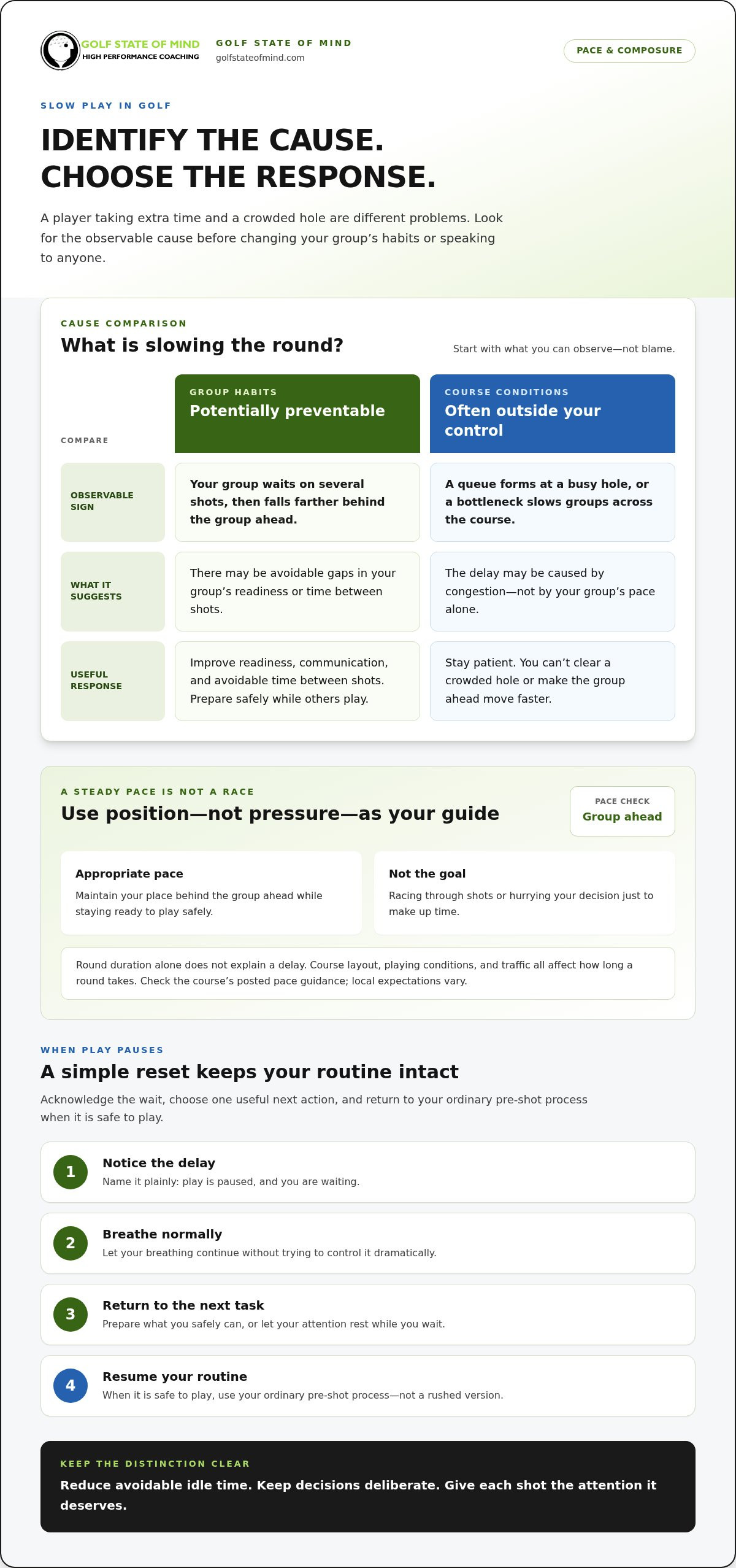
A delay calls for an adjustment in how you use the time, not a hurried swing. Use a simple sequence to stay prepared, respect safe play, and return to your normal process when it’s your turn. This gives you something practical to do without letting the group ahead dictate your decisions.
Keep preparation practical. As you walk or ride toward your ball, work out what information you’ll need, such as the distance or lie, then choose a club when you can do so sensibly. Coordinate movement with your playing partners instead of making someone wait while you return to a bag or cart. Safety and course guidance always come first.
Once you’re ready to play, keep your familiar routine intact: assess the shot, choose a target, settle, and swing. Do the thinking before you’re standing over the ball, rather than shortening the moment when you need to focus. These habits also support the broader skill of maintaining focus during a golf round, even as circumstances change.
If your group is repeatedly losing ground and the cause seems controllable, keep the conversation specific and neutral. Try, “We’ve had a few waits here. Could we get ready while the others play, as long as it’s safe?” This describes the pattern and suggests one shared action. Avoid singling out a player or making accusations. The goal is a practical adjustment, not an argument.
If the delay continues, or the issue appears to involve course congestion, don’t escalate the exchange. Follow course staff guidance and focus on what your group can reasonably control. Dealing with slow play in golf is easier when preparation stays deliberate and communication stays respectful.
To build mental routines that support focus and composure through changing conditions, explore The Ultimate Mental Game Training System. It offers structured mental-game training, not a guarantee of faster rounds.
A steady response starts with knowing where your influence ends. You can prepare for your next shot, keep your group coordinated, and return your attention to the task after a pause. You can’t clear congestion or control how quickly other groups play. Separating those facts helps you act where action is useful and practise patience where it isn’t.
That distinction is central to dealing with slow play in golf. The goal isn’t to force yourself to enjoy waiting or make every round move faster. It’s to keep your decisions deliberate and your actions consistent, even when the pace is outside your control.
Choose one simple between-shot task, such as checking the next shot’s conditions or getting your club ready while a playing partner takes their turn, when it’s safe and considerate. After a delay, use the same brief reset: recognize the pause, return attention to the shot in front of you, and follow your usual pre-shot process. Familiar actions provide structure without adding steps or rushing your swing.
You can make this a small part of a broader golf mental training system: practise the response when conditions are calm, so it’s easier to recall when they aren’t. The useful measure is not whether the course clears, but whether you return to your next decision with intention.
If waiting regularly pulls your attention away from the shot, structured mental-game training gives you a way to practise focus and routines. David MacKenzie, mental coach and founder of Golf State of Mind, focuses on the psychological side of performance. This preparation can support a more consistent response to delays; it doesn’t control course congestion or promise faster rounds or lower scores.
Start by noticing when your attention tends to drift. Is it while waiting to hit, after a frustrating pause, or when you feel pressure to catch up? Choose one routine to practise, then reflect after the round on whether you followed it. That reflection helps you refine your process without judging the round solely by its pace or outcome.
For a structured way to work on focus, routines, and composure, explore The Ultimate Mental Game Training System. Choose one mental skill to practise in your next round, and let that be your next step.
The next time the pace changes, practise the response you want to rely on: stay present, prepare with care, and give your next shot your full attention. Dealing with slow play in golf doesn’t require controlling every delay. It means building a steadier relationship with the parts of the round you can influence.
Golf State of Mind offers digital mental-game training and 1:1 coaching with mental coach David MacKenzie. These options support psychological preparation, not a promise of faster rounds or lower scores.
Choose one routine to practise in your next round. To build that practice further, explore The Ultimate Mental Game Training System. Let your next step be deliberate, and carry that calm intention to the first tee.
Ready golf is commonly used in casual play, but it isn’t automatically appropriate for every round. Your format, course instructions, and competition conditions determine whether players can depart from the usual order. Before teeing off, agree with your group how you’ll handle situations such as a player farther from the hole who’s ready first. Whatever sequence you use, wait until the area is clear and avoid distracting anyone preparing to hit.
Yes, if there’s room ahead for your group to move through and players behind are being held up, asking to play through may be reasonable. First consider whether the slower group has space to let you pass safely. Ask politely, or seek course staff guidance if the course has a preferred process. If a queue continues ahead, don’t pressure the group; passing won’t solve the bottleneck.
Prepare for your next shot while walking or waiting: note your ball’s position, consider a likely club, and be ready to adjust after checking the lie. Keep your group’s movement coordinated, and avoid turning club choice into a last-minute discussion at the ball. When it’s your turn, keep the routine that helps you commit. A group gains rhythm through shared preparation, not one player swinging before they’re ready.
If players behind are waiting and your group has clear space ahead, check the course’s pace guidance and act together. Each player can consider a club before reaching the ball, keep track of landing areas, and avoid extending searches unnecessarily. If the gap remains open, use the course’s preferred way to let faster players through. Keep the conversation factual and respectful rather than apologetic or accusatory.
Not necessarily. In many casual rounds, players may agree to use ready golf when it’s safe. A competition format or course instruction may require a different order, so don’t assume the same convention applies everywhere. Clarify expectations with your group before changing the sequence. Never hit while another golfer is in range, and stay quiet while someone addresses the ball. Courtesy and safety matter more than gaining a few seconds.
Start by acknowledging that repeated waits can be frustrating, then give your attention a concrete task: choose a landing area, check your lie, or recall your next routine cue. Avoid repeatedly reviewing how long the delay has lasted; it won’t clear the course and can pull focus from the shot. Dealing with slow play in golf also means accepting that congestion may be beyond your control while choosing how you respond.
The most useful thing golf hypnosis may change isn’t your swing, but how steadily you access skills you’ve already practised. So, does golf hypnosis…
What if the best response to a three-putt isn’t a pep talk, but one calm sentence that helps you move on? A good 3-putt-quote can acknowledge the…
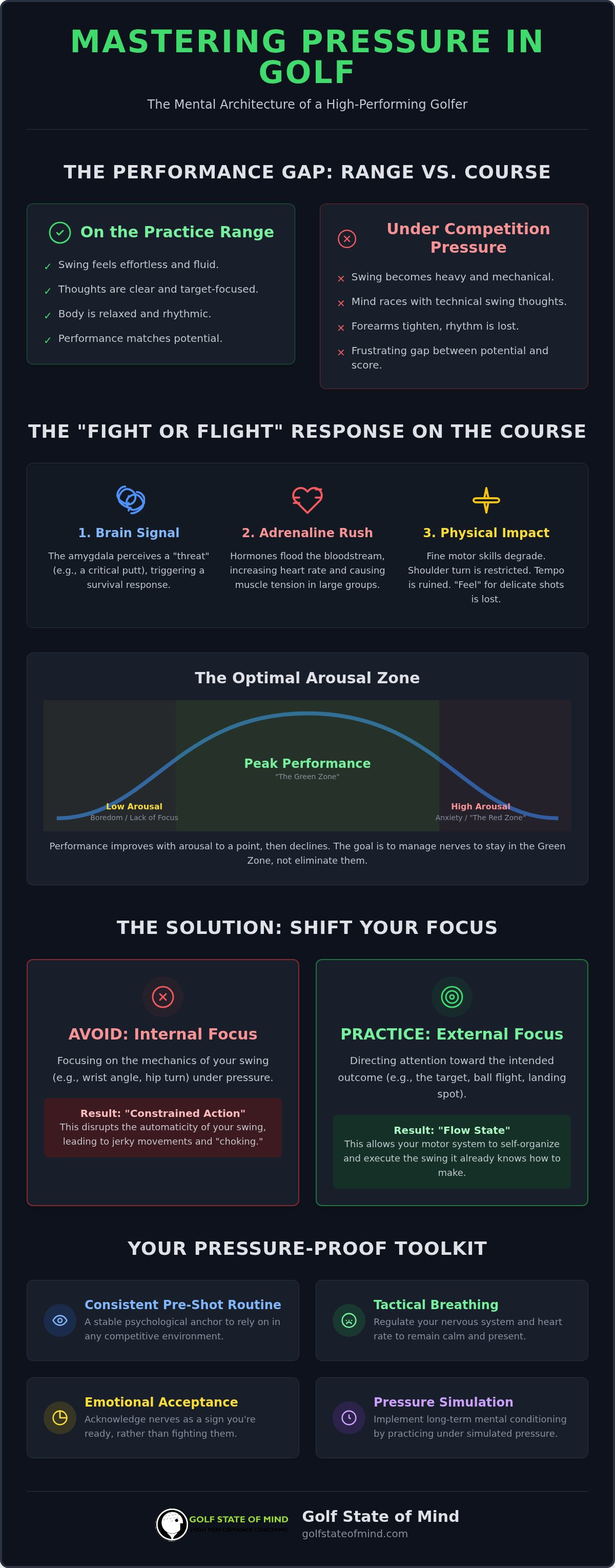
Why does a swing that feels effortless on the practice range suddenly become heavy and mechanical when you step onto the first tee? You’ve likely…