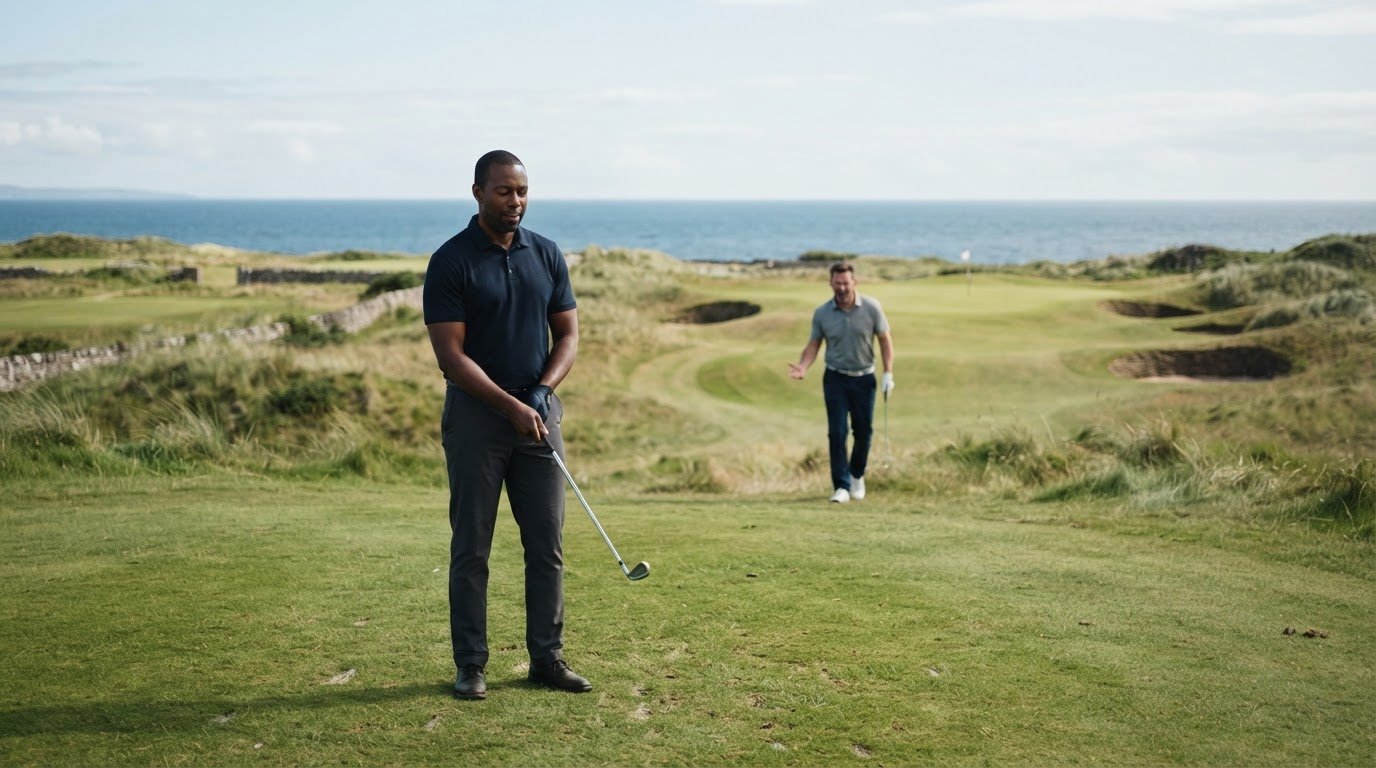
When you’re dealing with a bad golf partner mentally, step away if you can, take a few slow breaths, and bring your attention back to your next shot. If you need to address their behavior, speak calmly before frustration builds. If it’s simply irritating, don’t let their reaction dictate your mood or routine. You can control your response, even when you can’t control your partner.
A disruptive playing partner can make it harder to stay patient, think clearly, and enjoy the round. Your frustration is understandable, but carrying it from shot to shot gives their behavior more influence over your game than it deserves.
This article explains how to manage irritation, respond to angry or distracting behavior, and set a respectful boundary around unsolicited swing advice. You’ll also learn how to encourage a partner after a poor shot and reset after your own mistakes. The goal isn’t to force a perfect round or change someone else. It’s to protect your focus, follow your routine, and approach the next shot with a steadier mind.
Key Takeaways
- Recognize when a partner’s behavior is pulling your attention away from your own game, and reset before frustration follows you to the next shot.
- Address disruptive behavior calmly and early; if a stranger’s outburst isn’t a safety risk, disengaging can be more productive than reacting.
- Set a clear boundary around swing tips by briefly explaining that you’re following guidance from your golf pro.
- After a partner’s poor shot, offer simple encouragement instead of criticism or unsolicited technical advice.
- Let mistakes be moments, not verdicts: acknowledge what happened, release the self-criticism, and return to your next-shot routine.
1. Managing frustration and avoiding temper tantrums
When dealing with a bad golf partner mentally, move away when practical, keep walking, and breathe slowly. Then bring your attention back to your next shot instead of replaying their comments. You may not control a partner’s mood, but you can choose where your attention goes.
A poor shot can trigger a strong reaction. Imagine a 16-handicapper driving into the woods, then slamming a club 10 inches into the ground. The outburst cannot improve the shot, and watching it closely can draw you into the same frustration. Notice what happened, create some distance, and focus on your own preparation.
Use a brief breathing reset between shots. As you walk, breathe in comfortably, then slow your exhale and soften your shoulders. Notice your feet on the ground and identify one detail about the next shot, such as your target. This gives your mind a practical task instead of another round of complaints.
Slow play can test your patience, especially during a round that lasts about four hours. Instead of repeatedly discussing the delay, use the pause to prepare: check your yardage, consider your target, and settle your breathing. If a faster golfer makes you feel rushed, stick to your usual pre-shot routine. Skipping steps to match someone else’s pace can disrupt your focus.
Mental imagery can change how you interpret irritating behavior. Picture a partner’s dramatic sigh as an actor’s exaggerated performance, rather than a challenge you need to answer. The point isn’t to mock them, but to stop treating every reaction as something that demands your attention. Patience can help you play with a clearer mind.
Don’t keep revisiting your partner’s behavior or slow pace with others during the round. Repeating the complaint can keep frustration alive and distract you from the course. If you catch yourself doing it, pause, take a slow breath, and identify one useful next step. You might choose a club or begin your routine.
Respect still matters when someone is irritating. Don’t throw clubs, direct a stream of profanity at the group, or take a bad day out on your partner. Those actions create tension without helping your game. If you feel anger rising, step away briefly when appropriate, settle yourself, and return when you can speak and play with control.
An important part of dealing with a bad golf partner mentally is separating their mood from your experience. A negative comment, slow walk, or visible frustration doesn’t have to determine your enjoyment. Use each pause as a cue to reset, follow your routine, and focus on the next shot.
2. Responding to an angry or disruptive partner
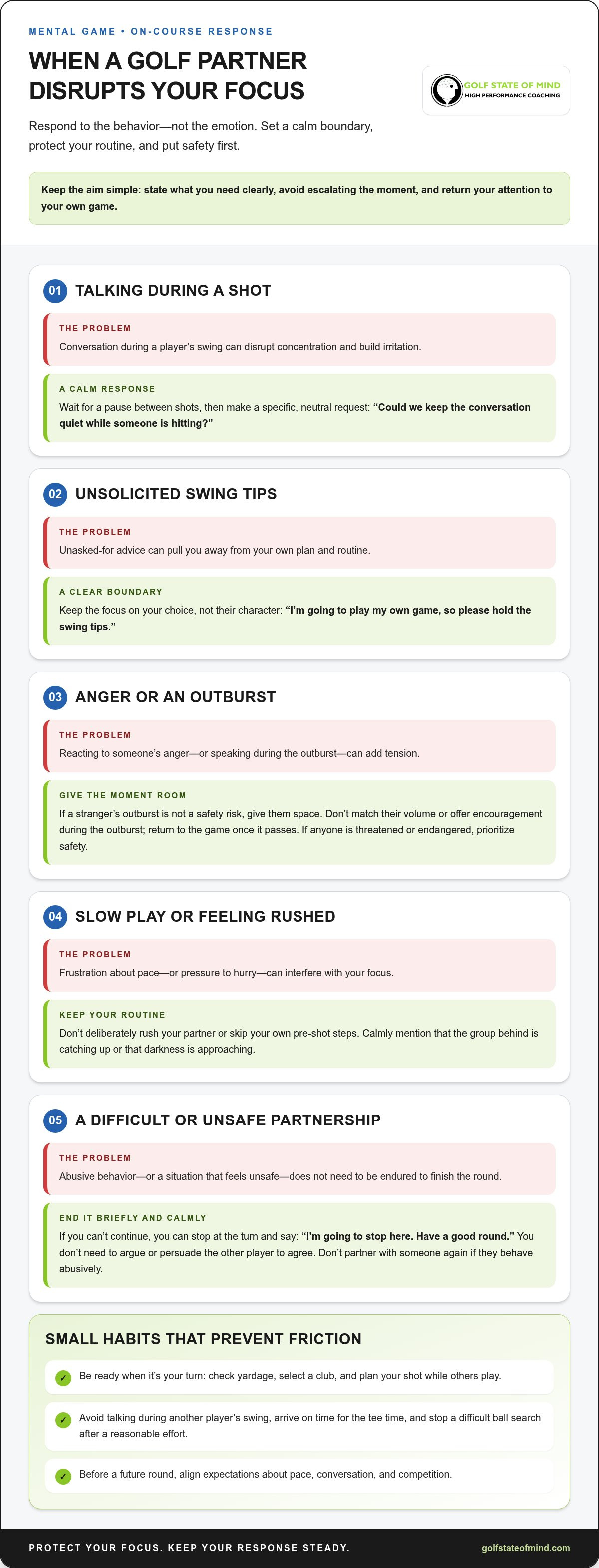
Address irritating behavior early, before frustration affects your tone. Keep your comment specific and neutral: “Could we keep the conversation quiet while someone is hitting?” This sets a clear expectation without attacking the person. Choose a pause between shots, not the moment someone is preparing to swing.
Before future rounds, discuss what you and a potential golf partner want from the game. A casual player might say, “I’m here to enjoy the round, not compete seriously,” while a focused player can explain their preference for quiet during shots. If someone behaves abusively, don’t partner with them again.
Good golf etiquette helps a round run more smoothly. Be ready when it’s your turn by checking yardage, selecting a club, and planning your shot while others play. Avoid talking during another player’s swing, arrive on time for the tee time, and stop a difficult ball search after a reasonable effort. These practical habits show respect without requiring a confrontation.
To set a boundary without escalating conflict, describe what you want changed, then make a short request. For example, “I’m going to play my own game, so please hold the swing tips,” focuses on your choice rather than the other person’s character. If slow play is the issue, don’t deliberately rush your partner. Calmly mention that the group behind is catching up or that darkness is approaching.
If a stranger has an angry outburst, generally ignore it unless someone’s safety is at risk. Don’t offer encouragement during the outburst; even kind words can feel intrusive then. Give the player space, avoid matching their volume, and return to the game once the moment passes. If they threaten or endanger someone, prioritize safety over golf etiquette.
Stop playing with a difficult partner if their behavior is abusive or continuing feels unsafe. If you can’t ignore the disruption, you can say at the turn, “I’m going to stop here. Have a good round.” Keep your message brief and calm. You don’t need to argue your decision or persuade the other player to agree.
Before a future round, use a clear conversation to align expectations about pace, conversation, and competition. If managing these interactions regularly is affecting your focus, structured mental-game practice can help you prepare responses before tension rises.
Speaking up while your irritation is still manageable can keep the conversation focused on the behavior you want changed. State your concern without judging your partner, and don’t wait until frustration has shaped your tone. The goal is to communicate your preference early, not prolong a disagreement. If your partner is already having an emotional outburst, don’t try to encourage them in that moment. Give the situation room to settle instead of adding words that may feel unwelcome.
If you can’t continue with a difficult partner, you can leave at the turn and wish them a good round. A courteous, brief goodbye lets you end your participation without reopening the dispute.
3. Avoiding unsolicited swing advice
Unasked-for swing advice can put a second voice in your head just before a shot. A partner might say, “Keep your left arm straight,” as you address the ball. Even if they mean well, that tip may conflict with the swing thought or routine you already trust. You don’t need to debate their expertise. Focus on the shot you’ve chosen to play.
Set your boundary with one calm sentence, then return to your preparation. For example: “Thanks, but I’m working with a golf pro and have agreed not to listen to anyone else.” This gives a clear reason without criticizing your partner’s technique. Say it between shots, not while someone is standing over the ball or immediately after a frustrating result.
If you aren’t working with a pro, choose a boundary that’s true for you. Try, “I appreciate it, but I’m sticking with my own plan today,” or, “I’d rather not think about mechanics during the round.” Keep your voice even and your wording brief. A long explanation can invite negotiation, while a direct statement makes your preference clear.
Then redirect the conversation. If your partner offers a grip tip, respond, “I’m going to focus on my target,” and begin your usual pre-shot routine. Check the lie, select a club, choose a target, and take your stance. These steps give your attention somewhere useful to go. You can acknowledge the person politely without trying their suggestion on the course.
Respect the same boundary in return. Don’t tell your partner to change their takeaway, grip, or alignment unless they ask for input. After a topped drive, for instance, “That looked like your head moved” may sound helpful but can add another concern. A simple, supportive comment is better, or give them space to work through the shot themselves.
If your partner repeats the advice, don’t turn the exchange into a technical argument. Calmly repeat, “I’m not taking swing tips during this round,” then focus on the game again. If they continue, limit the conversation and avoid responding to every new suggestion. Your composure doesn’t depend on convincing them. It comes from keeping your decisions and attention under your control.
Before your next tee shot, identify one cue you intend to use, if any. For example, choose “smooth tempo” rather than collecting several instructions from different people. If an unwanted tip lingers, notice it, let it pass, and return to your chosen cue. A consistent response protects your routine and keeps the round focused on playing, not debating mechanics.
4. Encouraging partners after bad shots
A partner who has just hit a poor shot needs support, not a verdict. If their drive slices into the rough, avoid comments like, “You always do that.” Try, “Don’t worry, you can make it up,” then let them decide how to approach the next shot. Encouragement should help steady their attention, not demand that they feel cheerful immediately.
Keep your words simple and specific. After a missed fairway, “You’ve still got a shot” acknowledges the situation without pretending the ball landed perfectly. If your partner looks frustrated after a missed putt, a quiet “Take your time” gives them room to reset. Match your tone to their mood. An animated pep talk can feel intrusive when someone wants a moment of silence.
Timing matters. Don’t speak while your partner is setting up or preparing to swing. Wait until the shot is over, then offer one supportive sentence before they plan their next move. For example, after a ball lands in a bunker, say, “You can still get this close,” instead of analyzing their club choice or describing what went wrong. One calm response is often more respectful than repeated reassurance.
Avoid turning encouragement into pressure. “You need to make this one” raises the stakes, especially when your partner already feels tense. Replace it with, “Commit to your line,” or, “Play the shot you see.” These phrases direct attention to a controllable decision. They don’t promise a result and leave the golfer responsible for choosing the shot.
If your partner regularly putts from about one foot or less, you can politely suggest that the short putt is good. Make the offer courteous and clear, without making them feel rushed or embarrassed. If they want to putt out, let them. The aim is to be considerate, not to take control of their routine.
After your partner’s mistake, resist the urge to compare their shot with yours. Saying, “I’ve got us covered,” can reassure them in a team format, but may sound dismissive during an individual round. Choose words that fit the situation. “Shake it off” can help a friend who welcomes direct encouragement, while a quiet nod may suit someone who prefers less conversation.
Then give your partner space to move on. Don’t keep bringing up the bad shot at the next tee or turn it into a joke unless they welcome that response. A simple pattern works well: wait until the shot ends, offer one kind phrase, and let them prepare. Respectful encouragement supports the partnership while keeping attention on the next decision.
5. Laughing at mistakes and moving on
A missed 4-foot putt can provoke more self-criticism than the shot deserves. A useful reset begins by naming what happened without turning it into a judgment: “I missed that putt.” Then take one breath, step away from the green, and give your attention to the next decision. You can recognize disappointment without carrying it to the next hole.
Humor can loosen the grip of a mistake when it’s aimed at the moment, not at someone’s ability. If you skull a ball 50 yards into the woods, a brief “That was an adventurous route” may help you release tension. Don’t force a joke if you feel genuinely upset. A quiet reset is enough; the goal is perspective, not pretending the shot was good.
To focus on your game rather than your partner’s mistakes, give yourself a clear task after each shot. Choose your target, assess your lie, and prepare your club while your partner considers their next decision. If their ball finds a bunker, let them work through it without mentally replaying their swing. Your attention is most useful when it serves your next shot.
Separate the result from your response. You can’t undo a missed putt, but you can decide whether to criticize yourself, blame the green, or begin your routine again. Try a short sequence: acknowledge the error, identify one practical lesson, then let the analysis go. For example, note that the putt finished short, but don’t keep replaying the miss as you walk to the next tee.
Keep the lesson specific and proportionate. If your approach lands in the rough, consider whether next time calls for a different target or club. Avoid sweeping conclusions like “I can’t putt today” after one mistake. One poor shot is information about that moment, not a complete measure of your ability. Once you’ve identified a useful adjustment, focus on the next shot.
If your partner makes a mistake, don’t use humor to embarrass them. A joke about their 50-yard mis-hit may deepen their frustration, especially if they’re already tense. Let them choose whether to laugh. You can keep the tone light by making a neutral comment about the situation, or simply give them space to prepare their next shot.
Practice this reset during ordinary rounds, not only after a disastrous hole. After a missed putt, use the same sequence: acknowledge, breathe, choose the next task. If you want a structured way to strengthen that mental routine, build your mental-game training plan and practice moving on with intention.
If a playing partner is annoying, try moving away when practical, continuing to walk, and breathing slowly to settle your mind and body.
When a beginner breaks a golf etiquette rule, explain the mistake quietly and kindly, without making them feel foolish.
Golf State of Mind: The Ultimate Mental Game Training System
Golf State of Mind’s Ultimate Mental Game Training System For Golf can help if frustration with partners keeps pulling you away from your own game. It focuses on the psychological side of golf, with practical ways to prepare, focus, and respond under pressure.
Turn to structured training when you want to practice these skills beyond a single round. If you prefer individual support, 1:1 Mental Coaching offers another way to work on the mental challenges affecting your performance. Mental Game Audios can also support focus as part of your preparation.
Choose the approach that fits how you want to work on your mental game. Visit golfstateofmind.com to explore the training and coaching options.
Carry a steadier mindset into your next round
Dealing with a bad golf partner mentally is a skill you can keep developing beyond the course. Each round gives you a chance to notice what disrupts your focus and decide how you want to respond next time. With practice, you can take a more deliberate approach to pressure, mistakes, and the people around you—a mindset that carries over whether you are managing frustration on the fairway or relaxing off the course with gaming tips, reviews, and updates from NoLimitsPlay.
If you want a structured way to continue, explore The Ultimate Mental Game Training System. Golf State of Mind also offers 1:1 Mental Coaching for golfers seeking individual support. For a separate challenge, its How to Cure the Yips resource addresses the yips.
Choose one mental skill to work on before your next tee time, then practice it with intention. Your partner may still have a difficult day. You can keep building the composure to play your own game.
Frequently Asked Questions
How Can I Manage My Anger?
Manage anger by deciding in advance how you’ll respond when a partner’s behavior irritates you. For example, make a personal rule not to comment on their play while you’re upset. If frustration rises after an exchange, wait until the next natural pause before speaking. That delay helps you keep your words measured and address the behavior rather than react to the emotion of the moment.
What should you say to a golf partner who is frustrating you?
Use a calm, specific sentence to describe the immediate issue. If a score disagreement is bothering you, say, “Can we settle the score for this hole before we tee off again?” Addressing it promptly can keep uncertainty from turning into resentment. Avoid accusations like “You’re always changing your score.” Stick to what needs resolving, listen to their response, and keep the conversation focused on the hole in question.